DUCK MASTER.
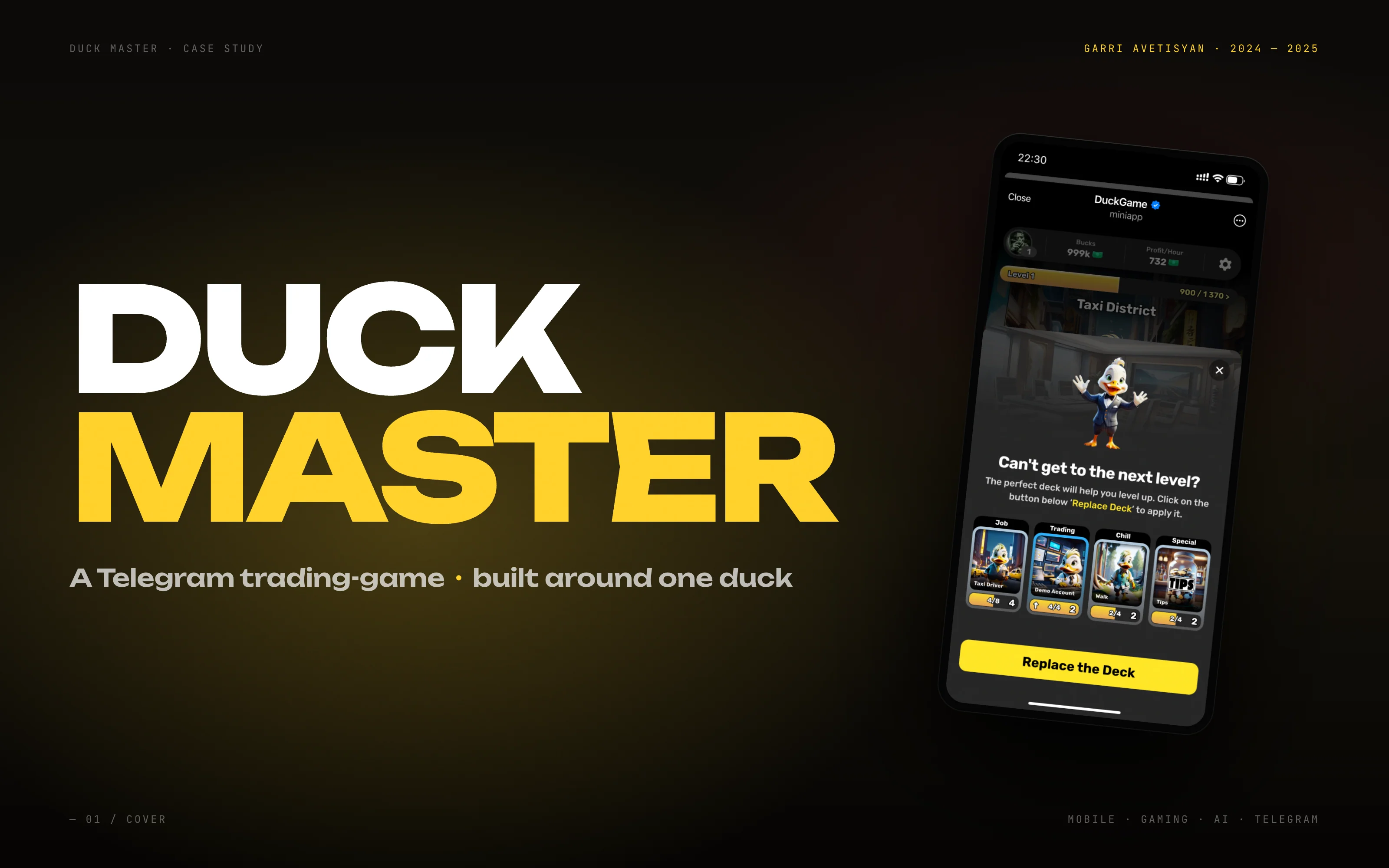
Viral Telegram mini-game designed for engagement loops and social sharing
Frames across the design system
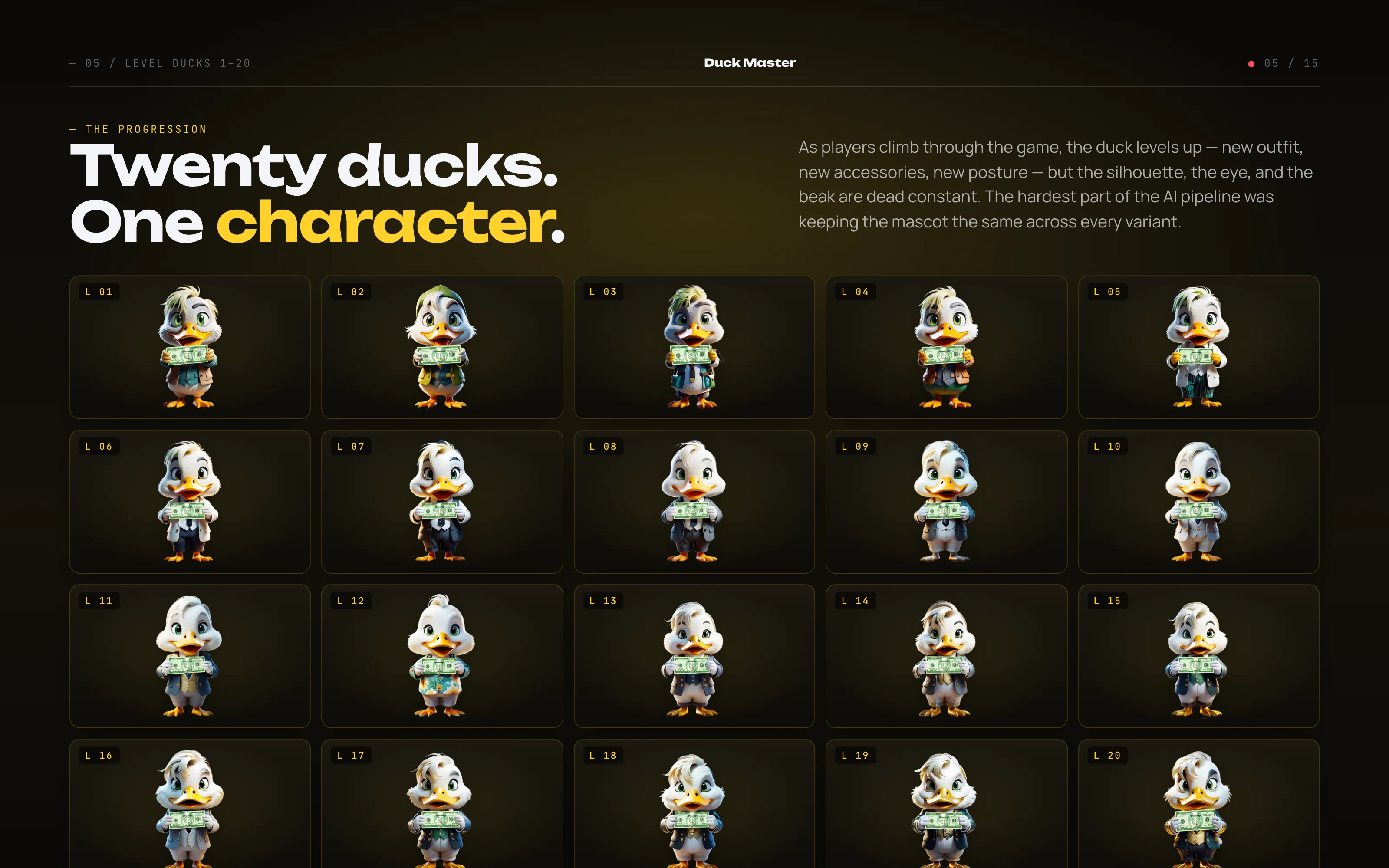
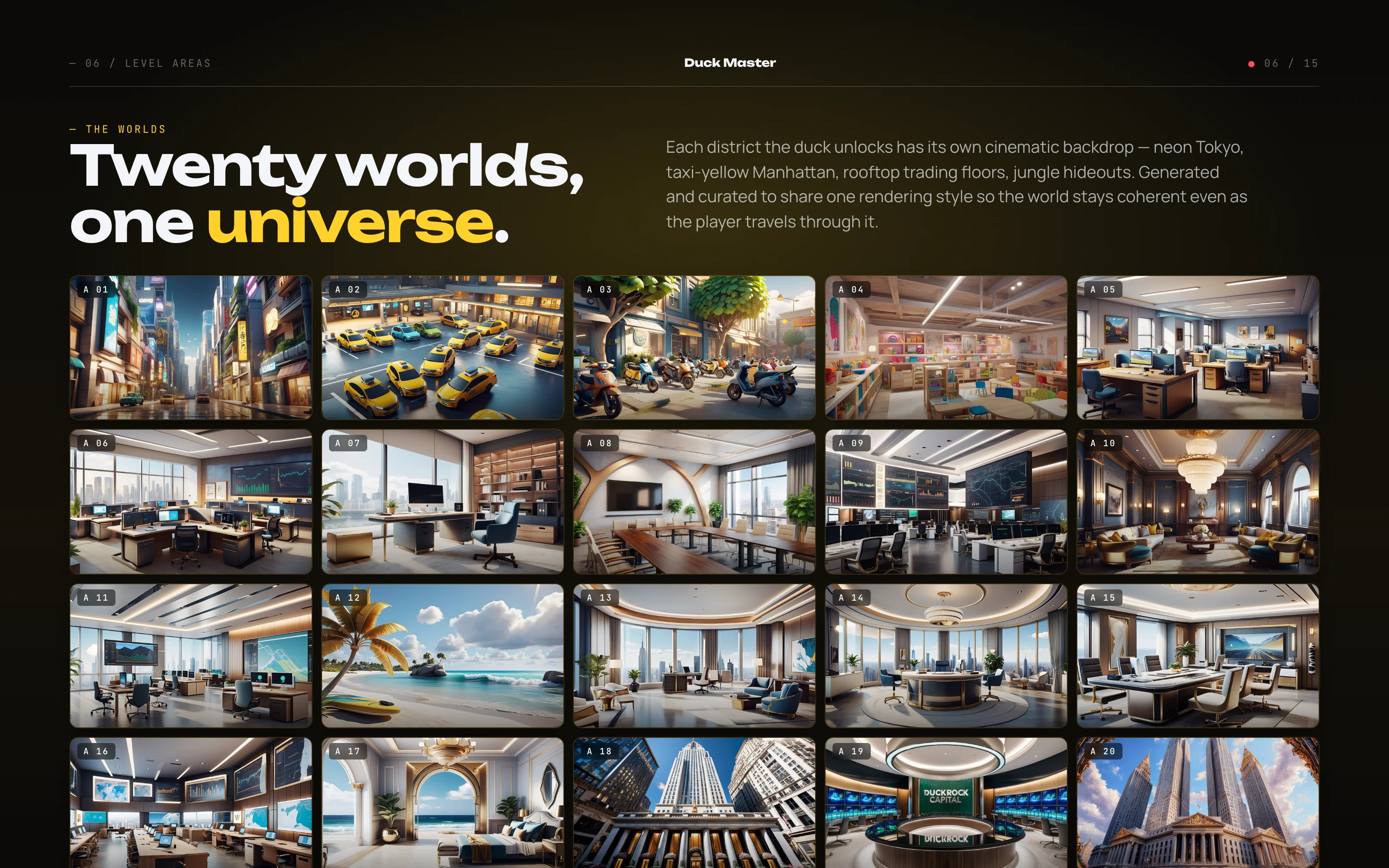
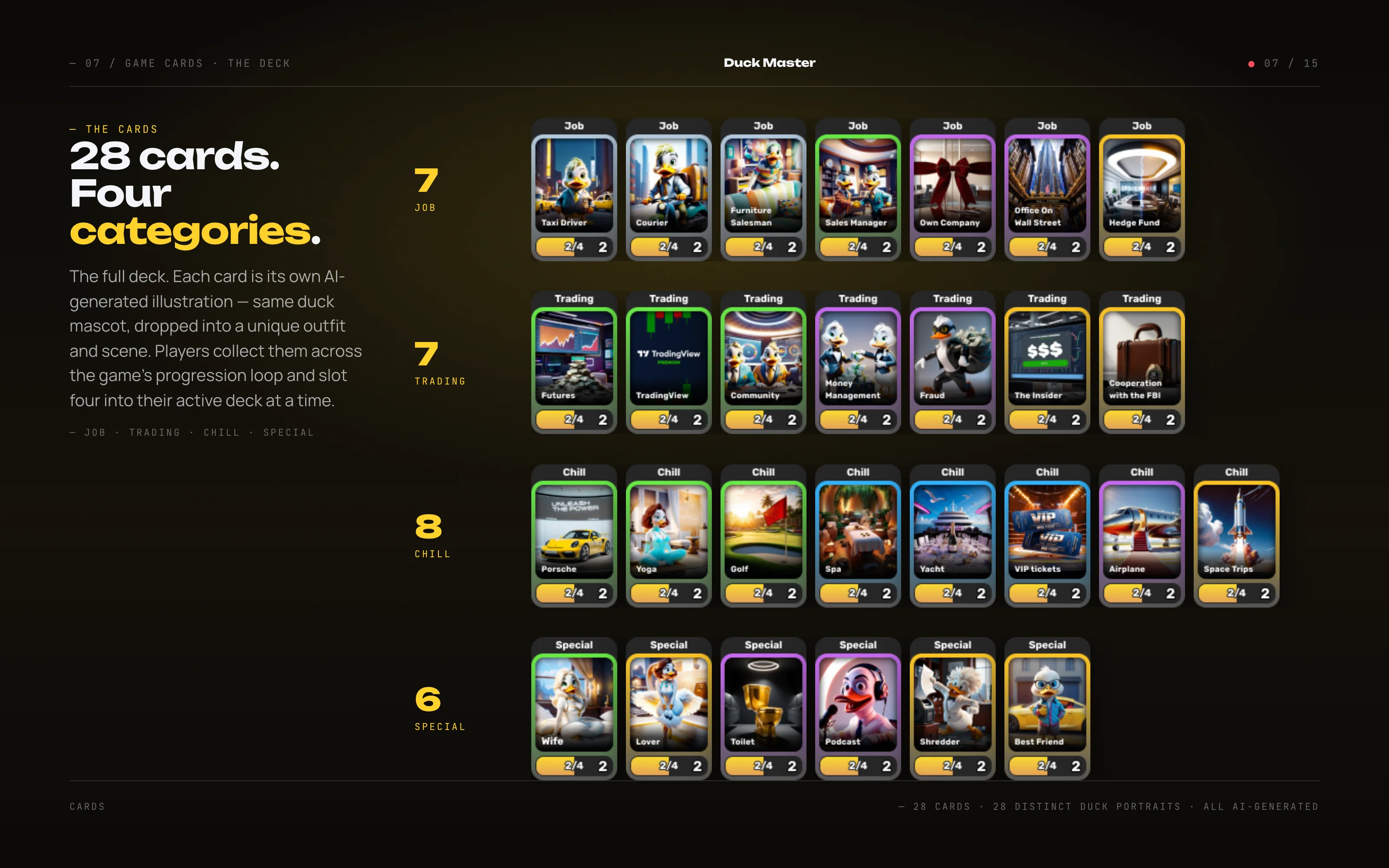
AI-generated game assets
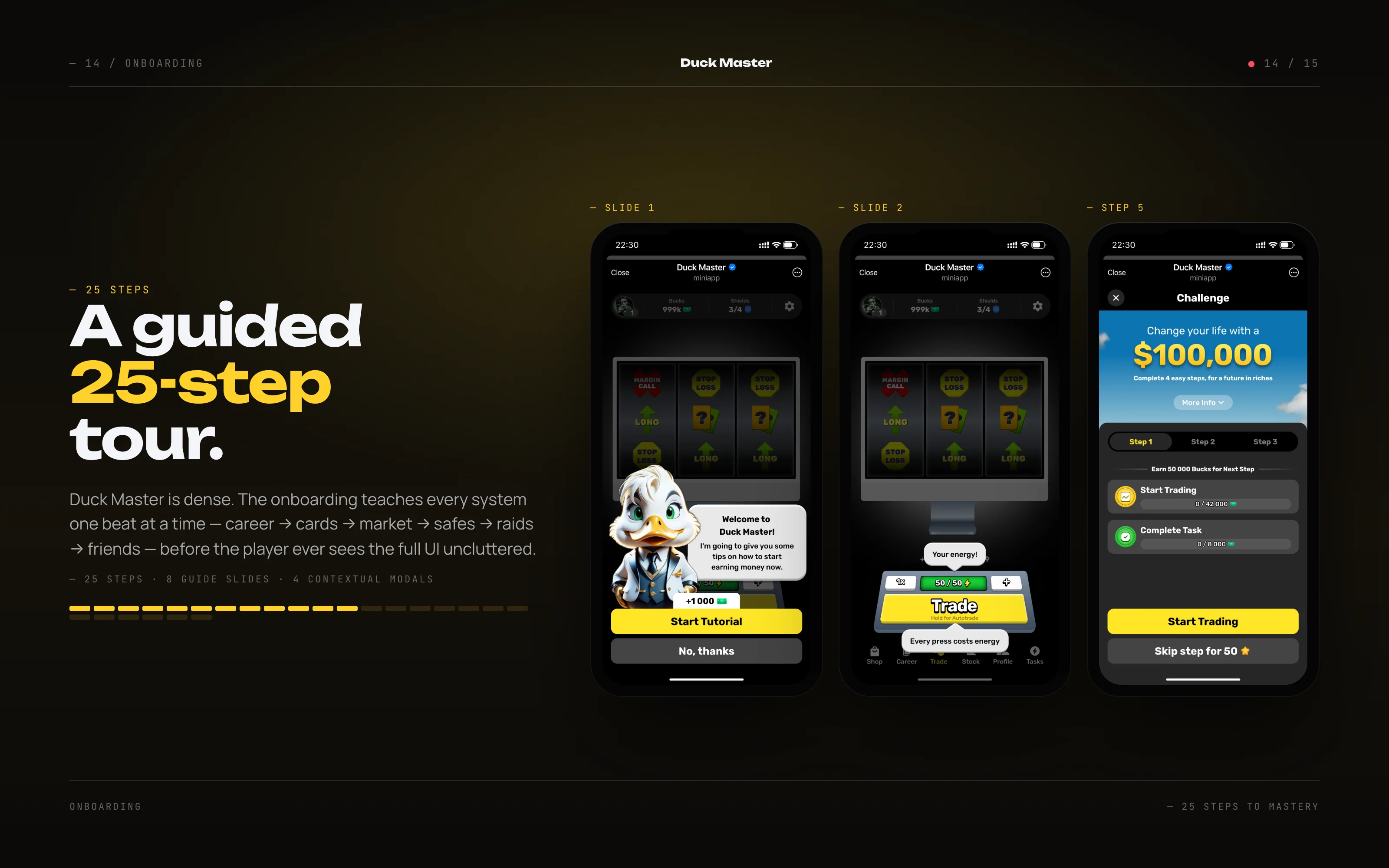
Onboarding steps
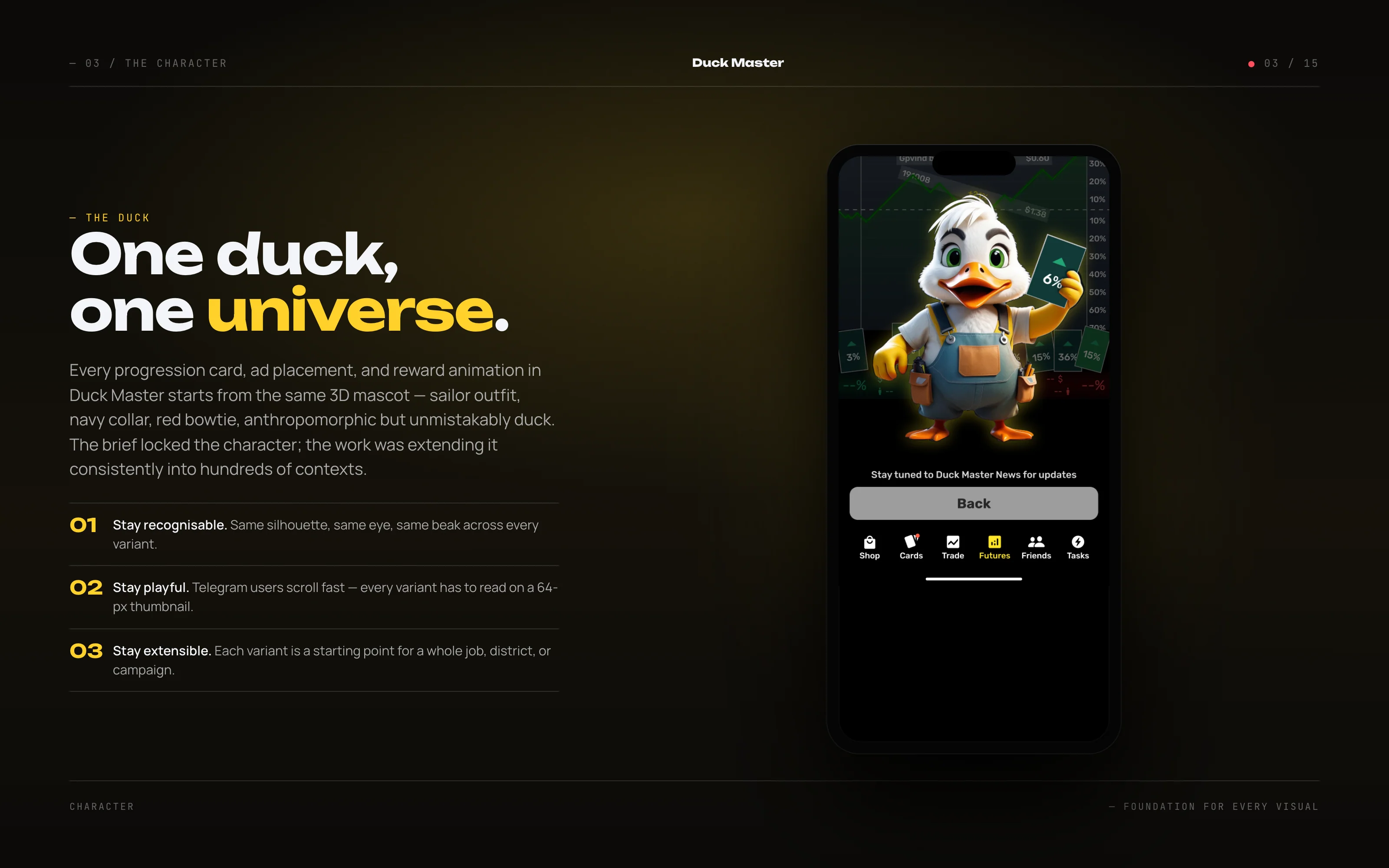
“One duck, one universe — every variant had to read as the same character.”
— Brand brief
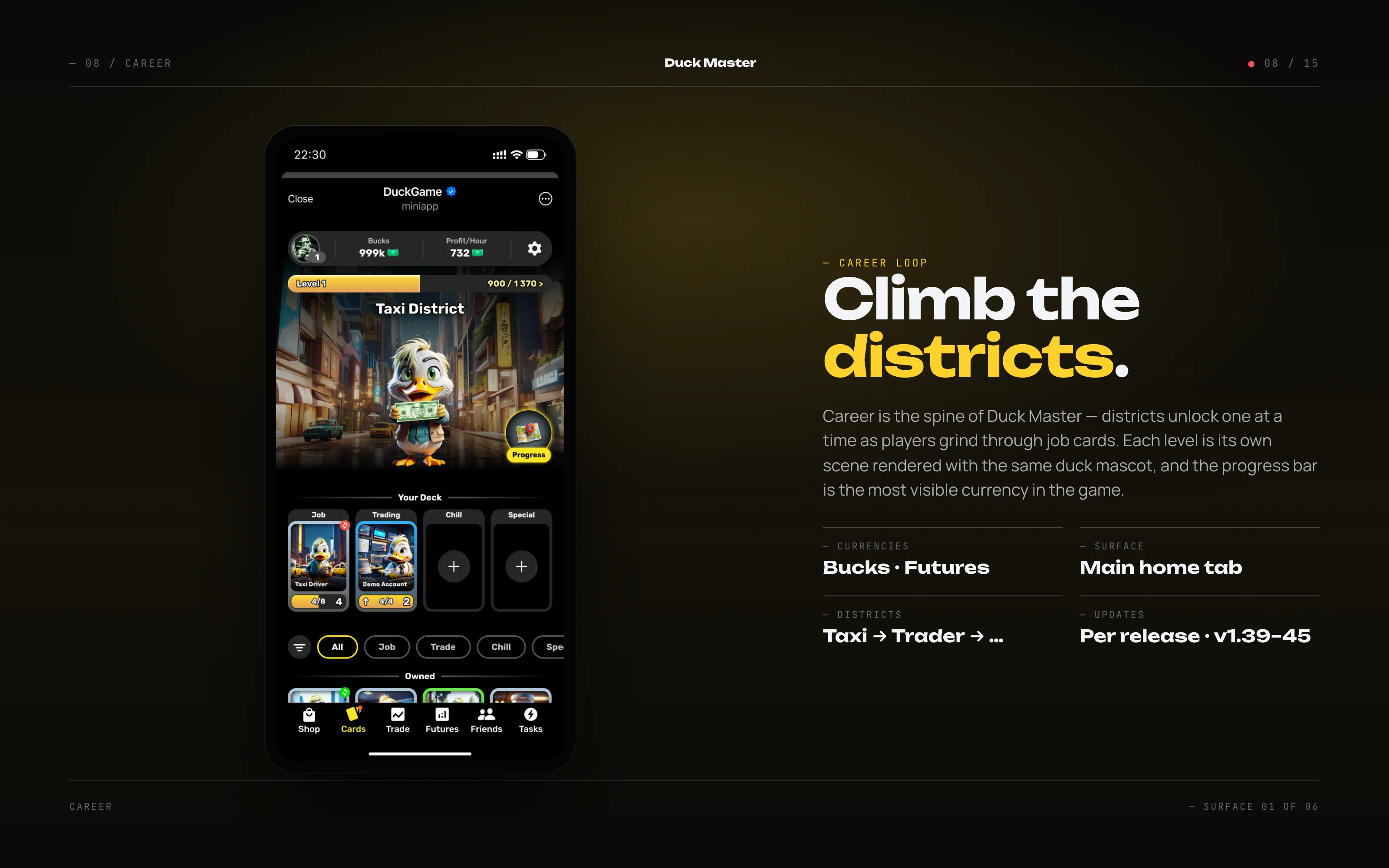
Product surfaces
Career · Cards · Stock Market · Mini-games · Shop · Social
What I owned
⌗ WHAT I OWNED
Led product design AND ran the AI asset pipeline — character art, cards, scenes.
— Overview
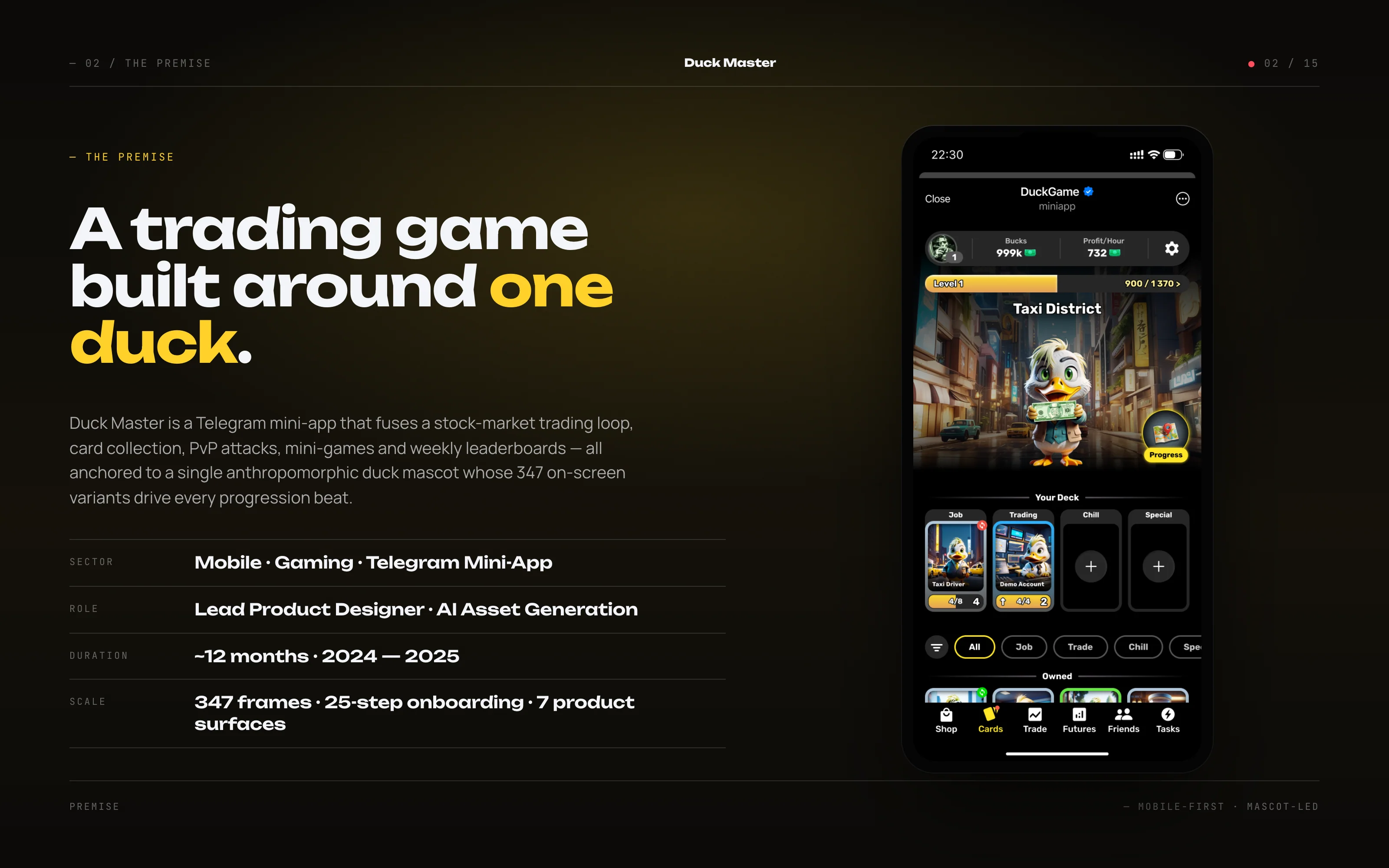
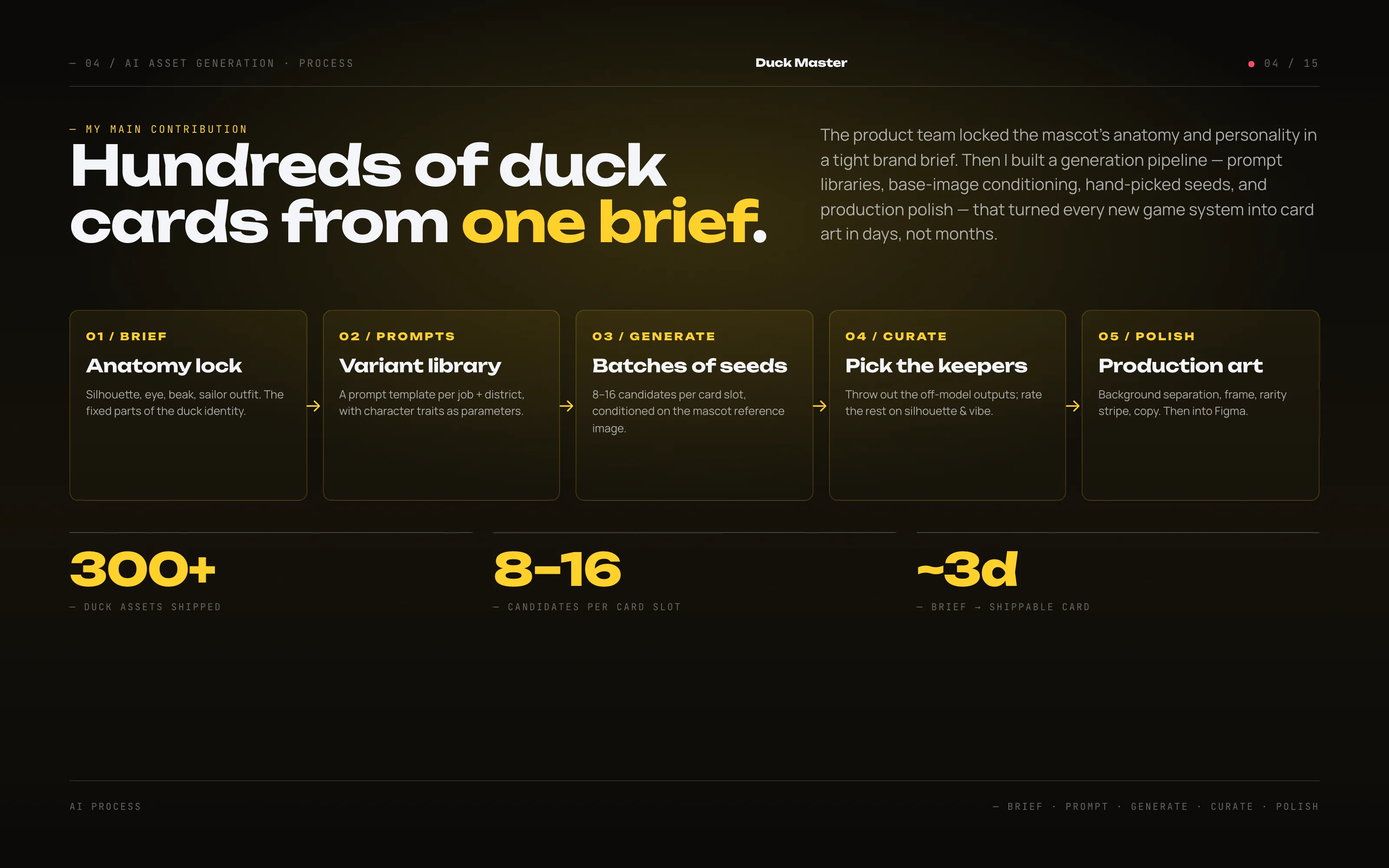
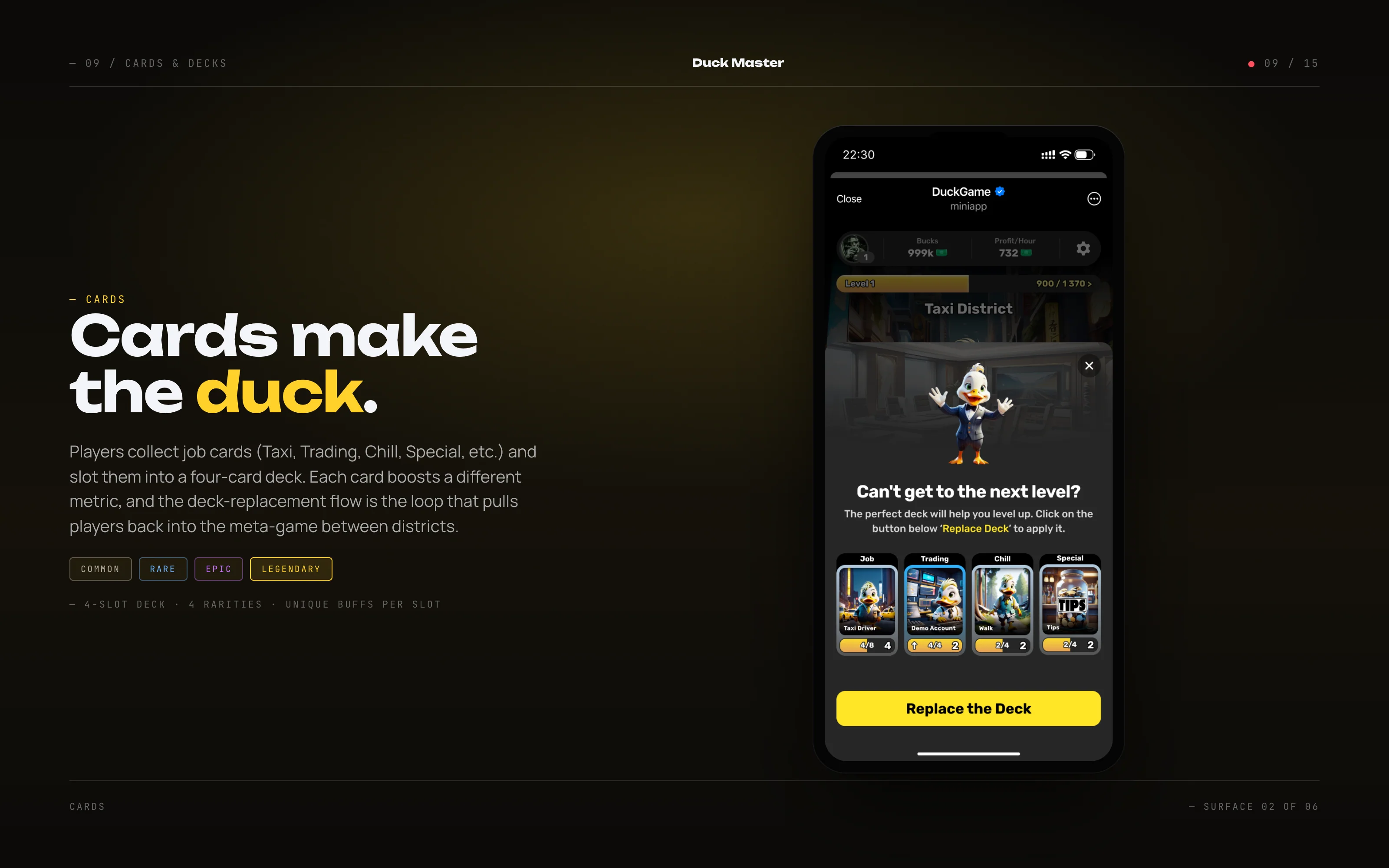
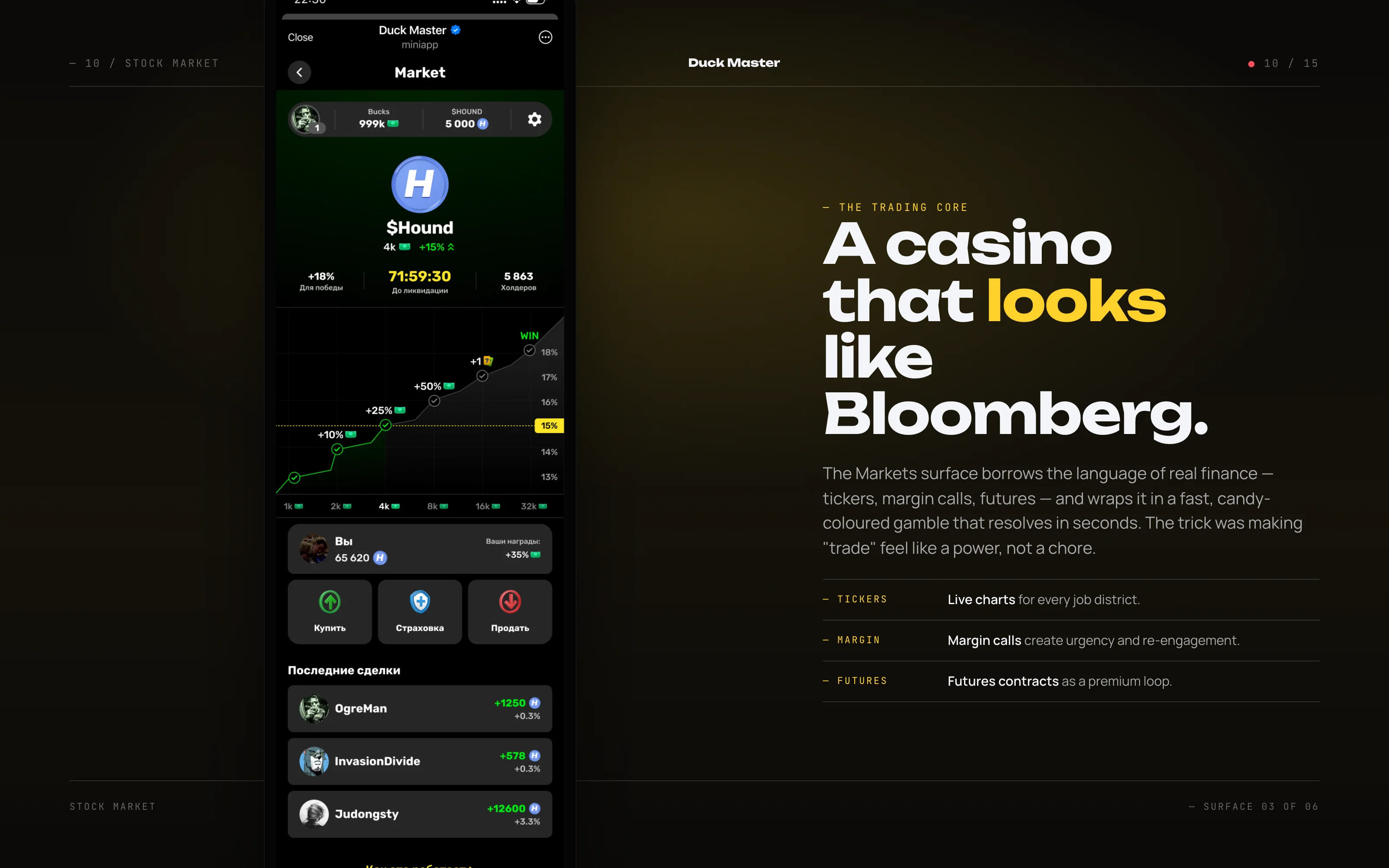
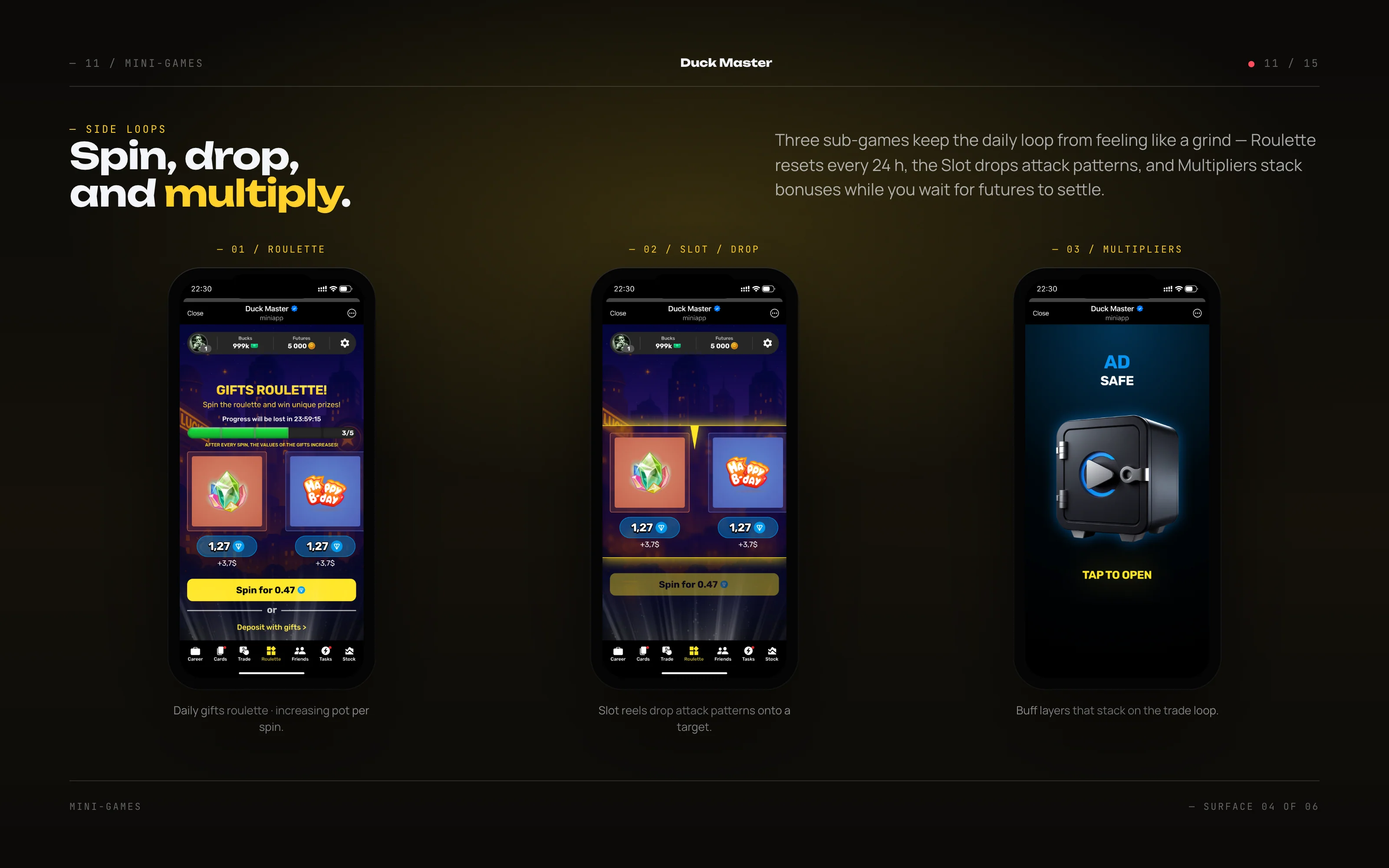
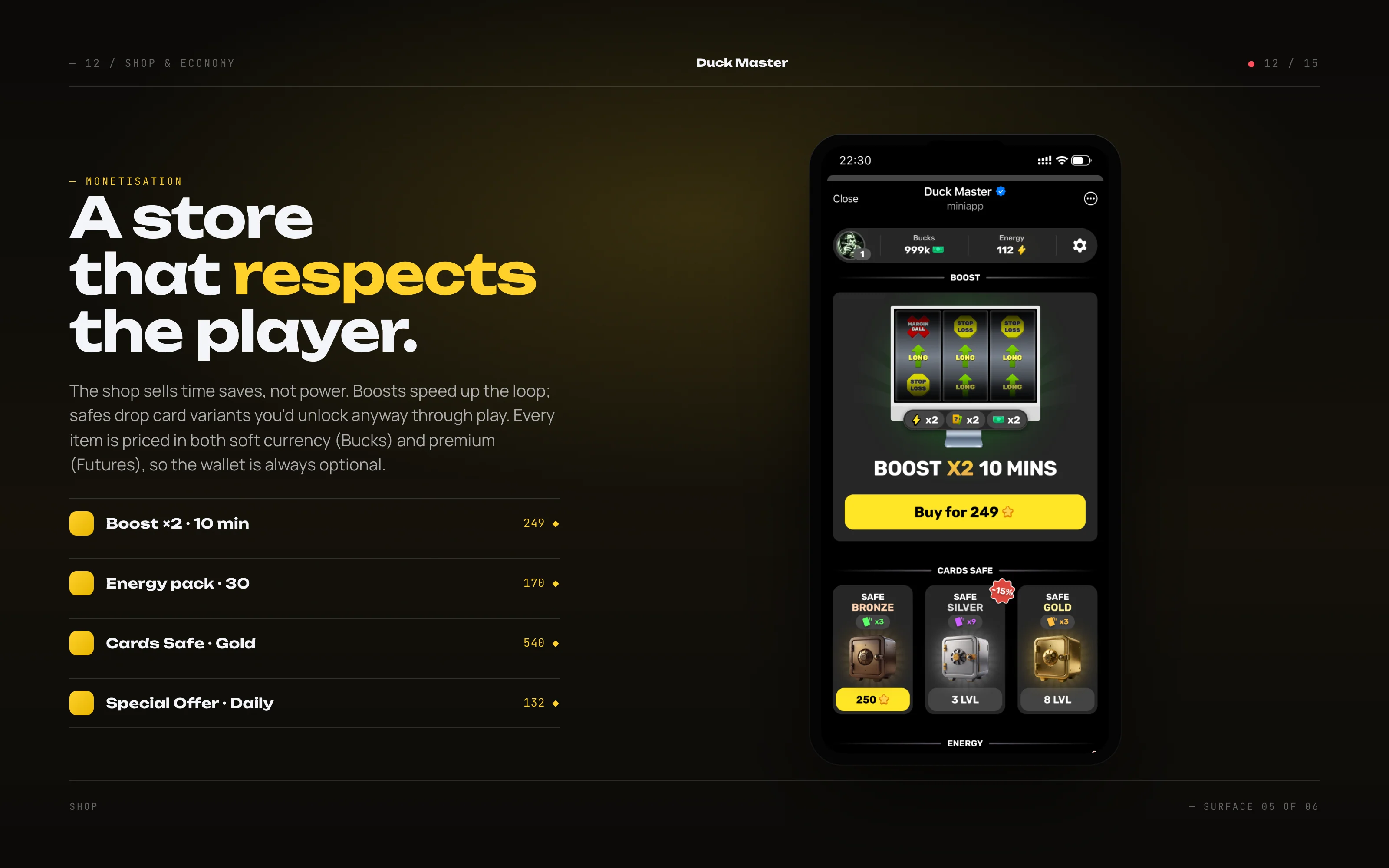
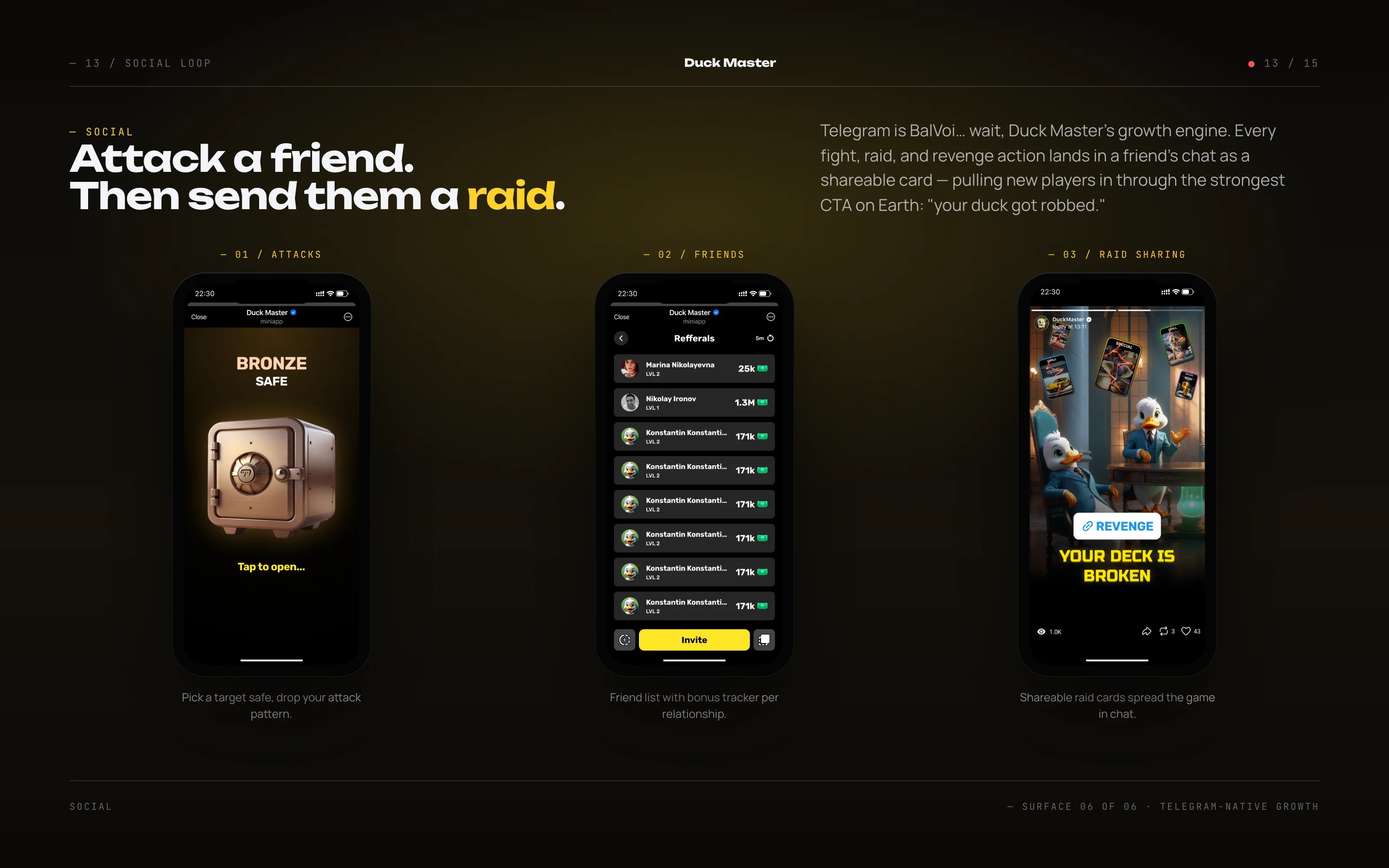
Duck Master is a Telegram mini-app that fuses a stock-market trading loop, card collection, PvP attacks, mini-games, and weekly leaderboards — all anchored to a single anthropomorphic duck mascot. Beyond leading product design across 347 frames and a 25-step onboarding, my main contribution was building the AI asset pipeline: prompt libraries, base-image conditioning, hand-curated seeds, and production polish that turned every new game system into shippable character art in days, not months. The same duck appears in 300+ contexts — sailor, taxi driver, trader, dealer, raid target — and the silhouette, eye, beak, and proportions read as one character every single time.
Frames designed
AI-generated assets
Onboarding steps
Product surfaces
— Reflection
Duck Master was where I learned that designing for AI-asset-heavy products is a different discipline. The hard part isn't generating images — it's generating the SAME character across hundreds of contexts when the model wants to drift on every prompt. I built a workflow around a locked anatomy brief, a prompt-template library, base-image conditioning, and a brutal curation pass. Every shipped card was one of 8–16 candidates.
What I'd change next time: invest in the curation tooling itself. By the end I was scoring candidates in spreadsheets, which is fine for a dozen cards and unbearable for hundreds. A lightweight web tool with side-by-side comparisons and silhouette overlays would have saved weeks.