— Playable build · in development
MARS:
LAST STAND
Hold the line on a world that keeps breaking beneath you.
A browser-based sci-fi survival shooter where alien pressure, limited resources and destructible cover change the shape of every encounter.
Source access requires permission to the private repository.
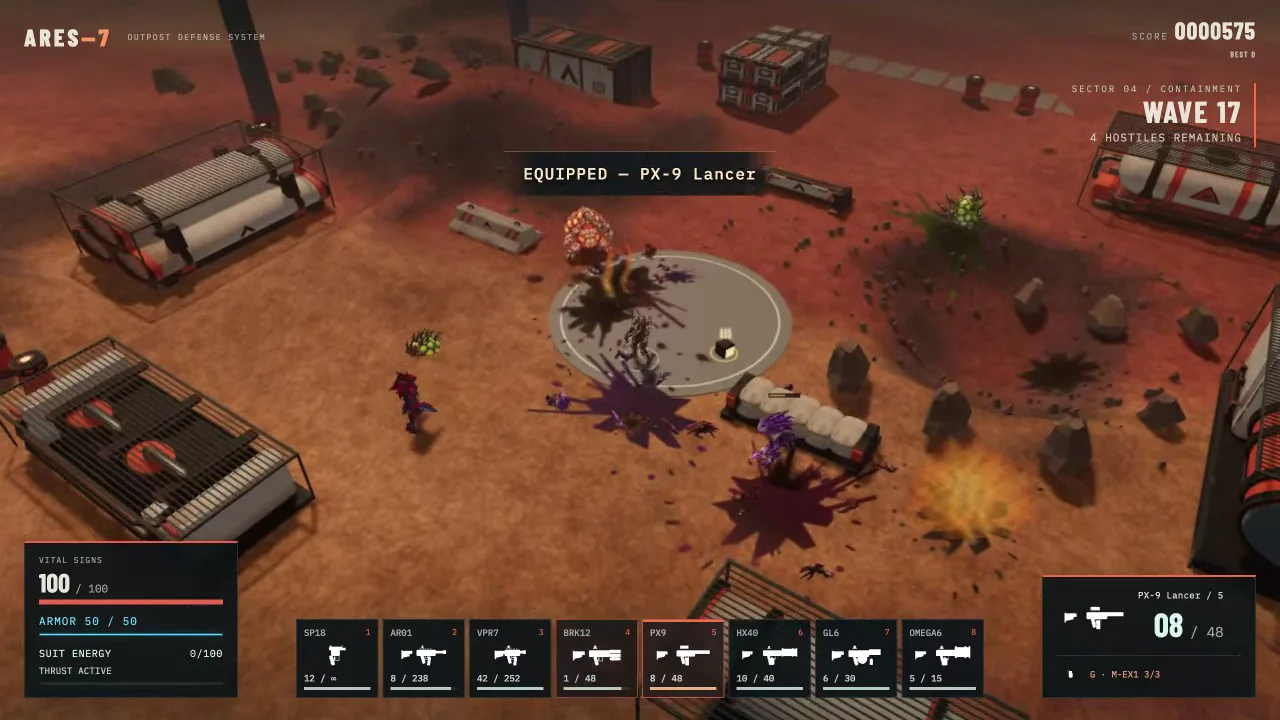 Actual gameplay · silent captureThe battlefield in motion
Game parameters, not player or business outcomes.
01 / The design challenge
Keep the fight readable as the arena changes.
An escalating wave game can become visual noise: enemies arrive from different angles, cover disappears, ammunition runs down and a boss may occupy much of the screen. I directed the experience around three questions: what is threatening me, what choice can I make now, and which parts of the battlefield can I still trust?
02 / Threat grammar
Five species. Five kinds of pressure.
Color, silhouette and attack preparation work together. The Ravager closes in; the Phantom relocates; the Spitter projects a ranged threat; the Bombardier claims space with lobs; the Reaper establishes a firing lane. Their differences are meant to be recognized before reading a HUD label.
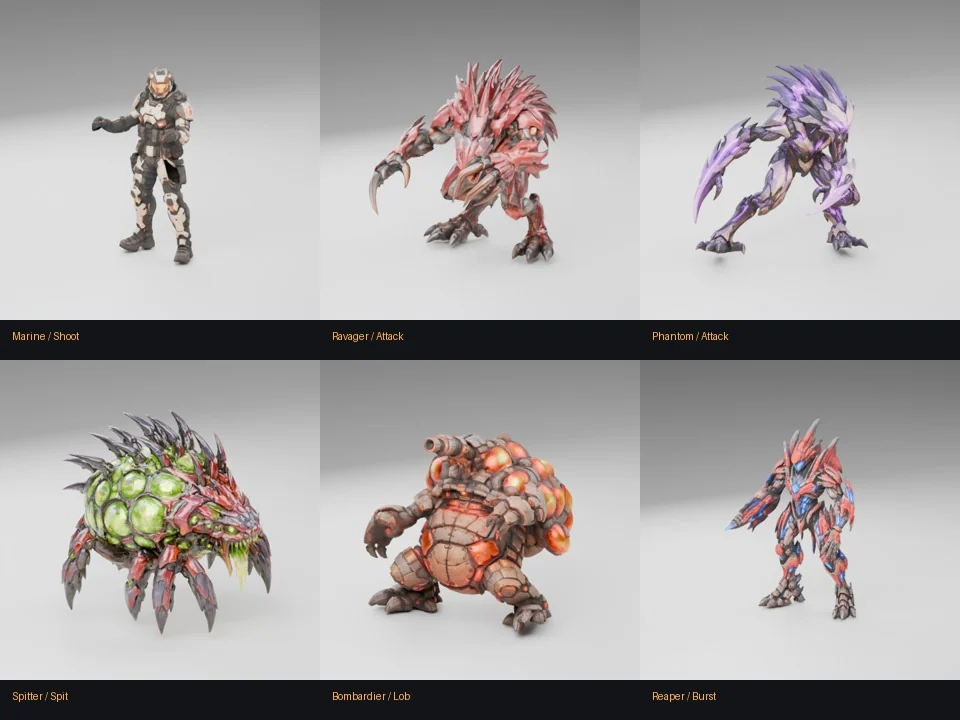
- 01RavagerClose pressure
- 02PhantomRelocation
- 03SpitterRanged shot
- 04BombardierArea denial
- 05ReaperFiring lane
03 / Decision pacing
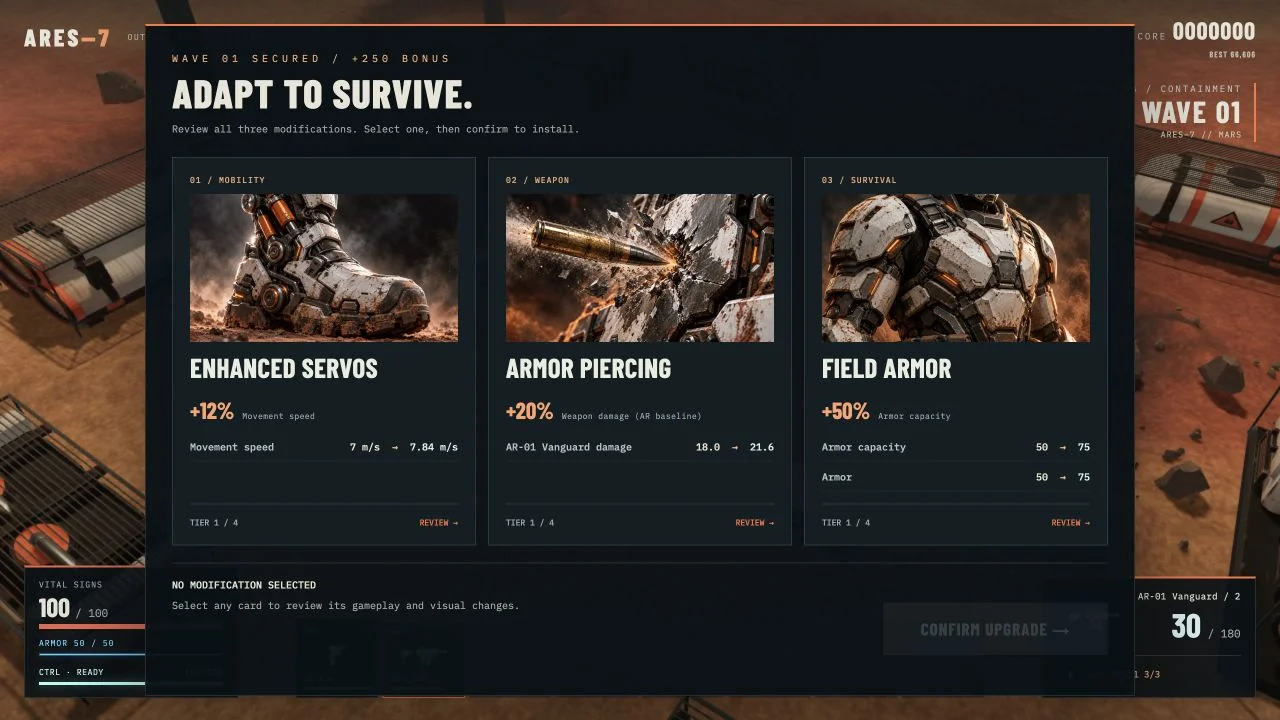
A deliberate pause between assaults.
The upgrade moment is intentionally not a one-click reward. Three cards are presented, one can be inspected, and a separate confirmation installs it. That small pause gives the player a chance to compare mobility, firepower and survival against the next wave.
- 01Review three
- 02Select one
- 03Confirm install
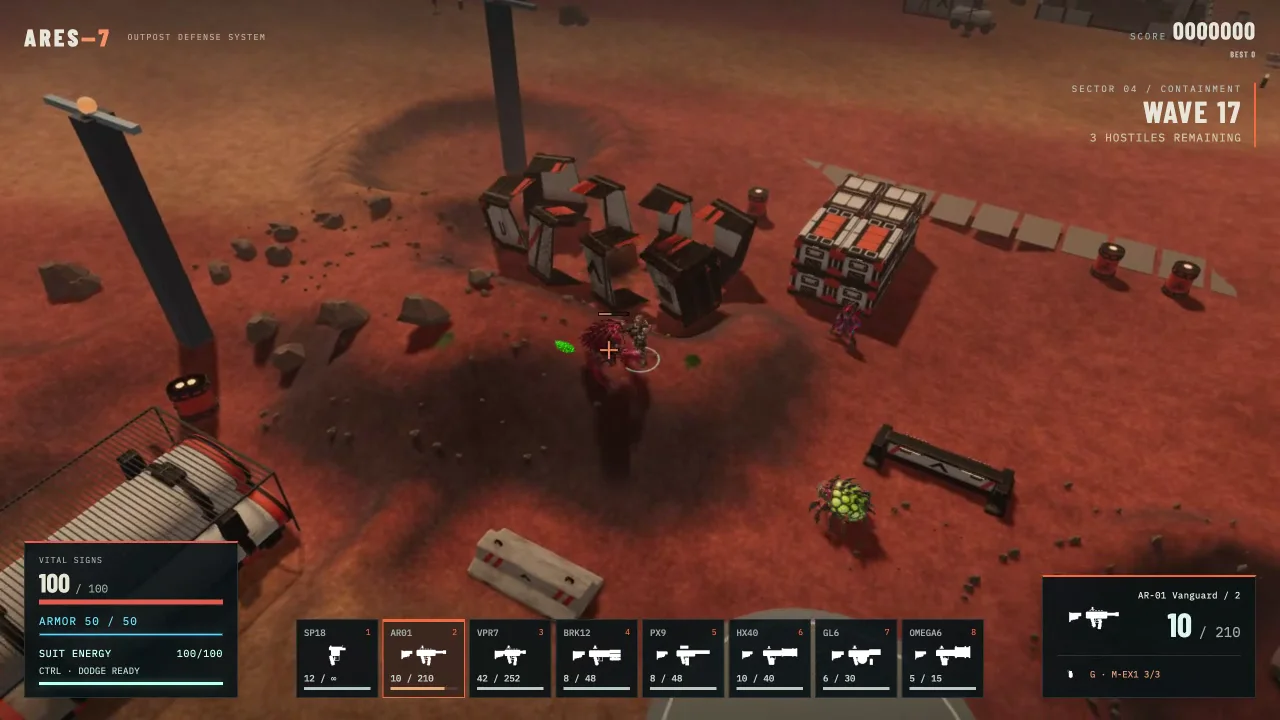 Actual gameplay · silent captureCover becomes wreckage
04 / Evolving cover
The battlefield should remember the fight.
Industrial structures move from intact cover to damage and collapse. The design distinguishes meaningful structural wreckage from tiny decorative fragments: large pieces can alter movement and fire lanes, while chips and particles should not trap the Marine. Destruction also changes support and navigation rather than leaving invisible intact walls behind.
05 / Encounter scale
The Hive Tyrant changes the reading order.
A huge body, artillery warnings, cannon bursts, minion release and melee telegraphs demand a different hierarchy from ordinary waves. Later controlled encounters can place multiple bosses on screen, each with its own projected health bar. Blackout narrows visibility but keeps attack cues legible.
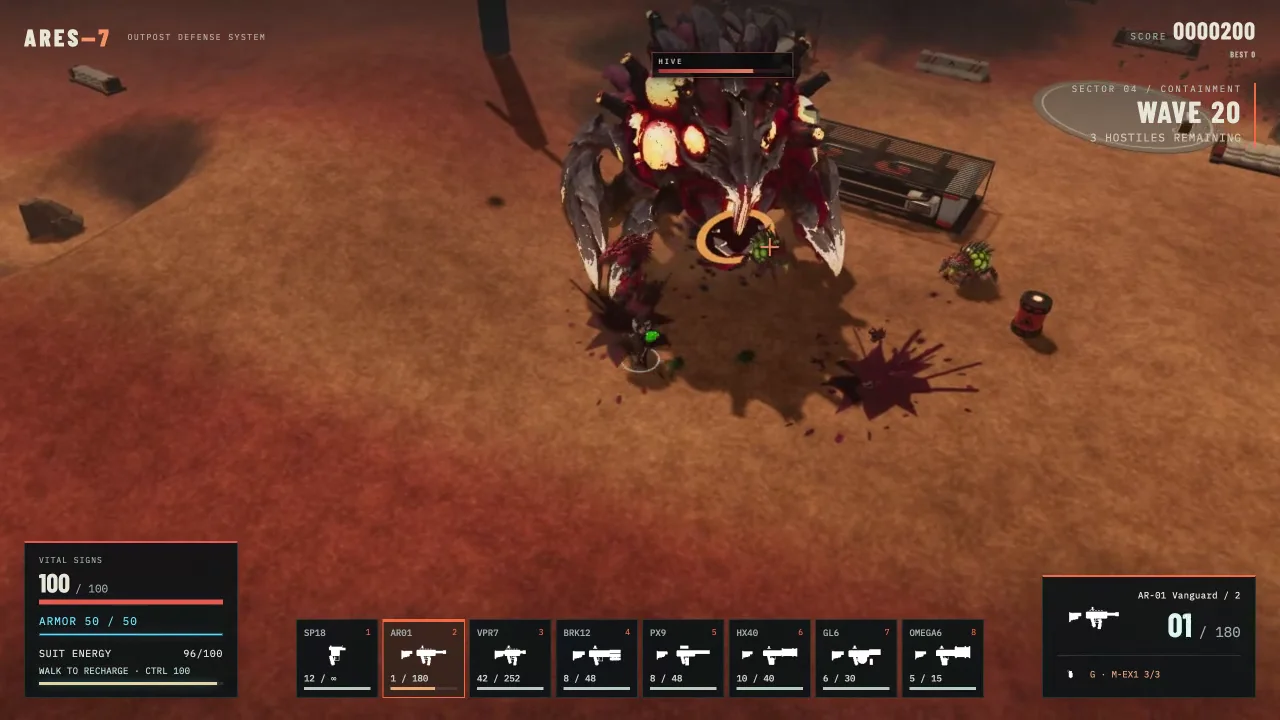 Actual gameplay · silent captureThe Hive Tyrant encounter
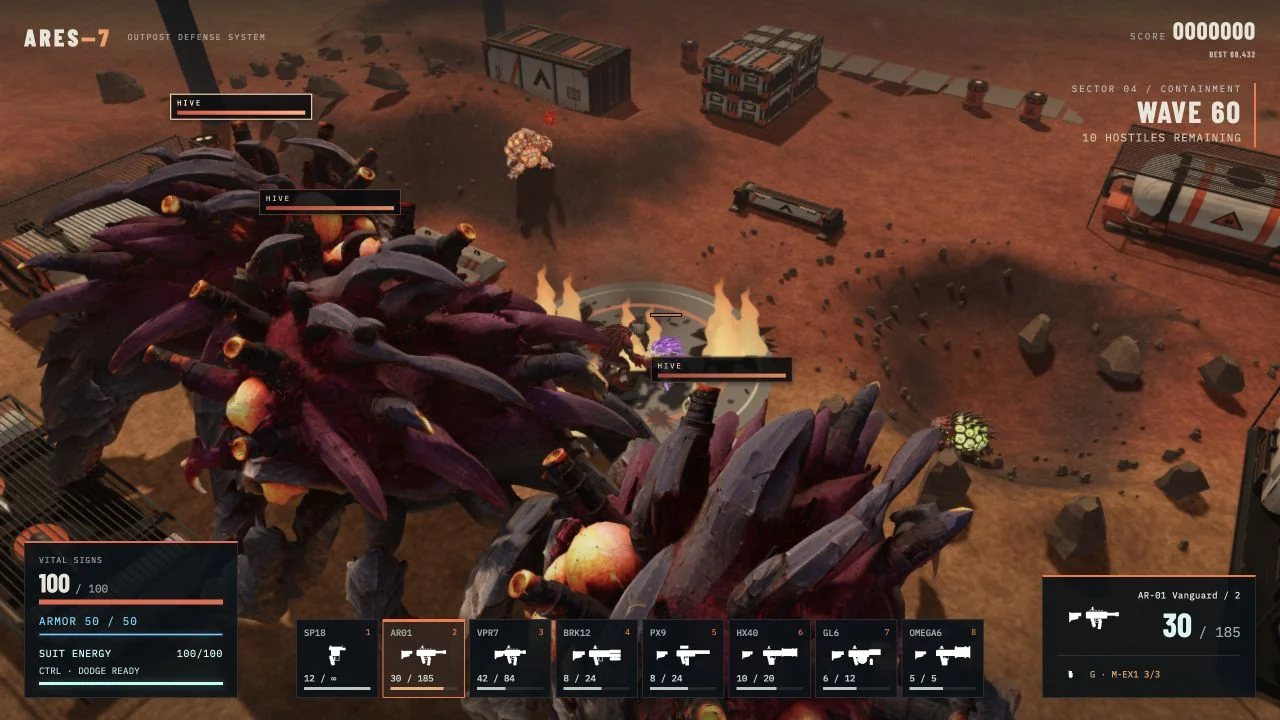
06 / Special-wave rule
Visibility becomes a resource.
Blackout Protocol reduces the visible field without removing the need to read enemy and attack cues. The lighting change is a gameplay constraint, not a decorative filter.
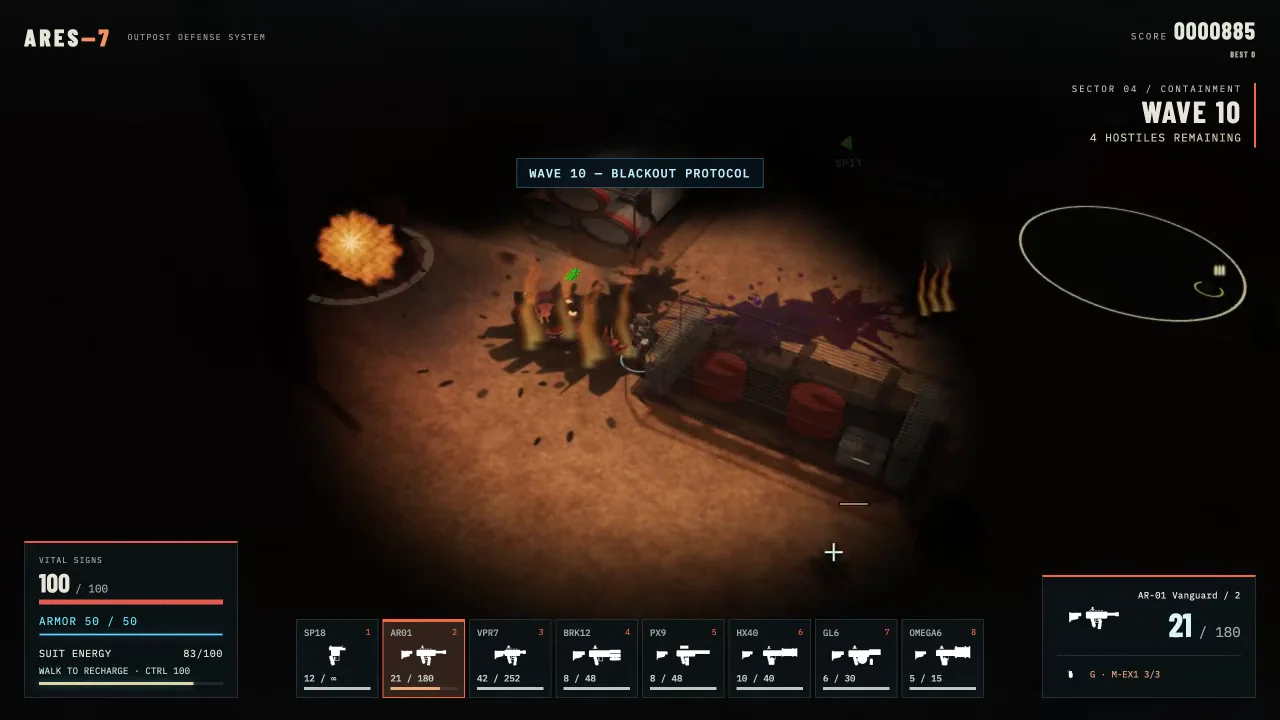 Actual gameplay · silent captureBlackout Protocol
07 / Combined pressure
The same boss reads differently in the dark.
The Wave 30 combination puts the Hive Tyrant inside the Blackout rule. I treated it as a separate readability problem: a huge threat and a restricted view must coexist without asking the player to guess where danger is.
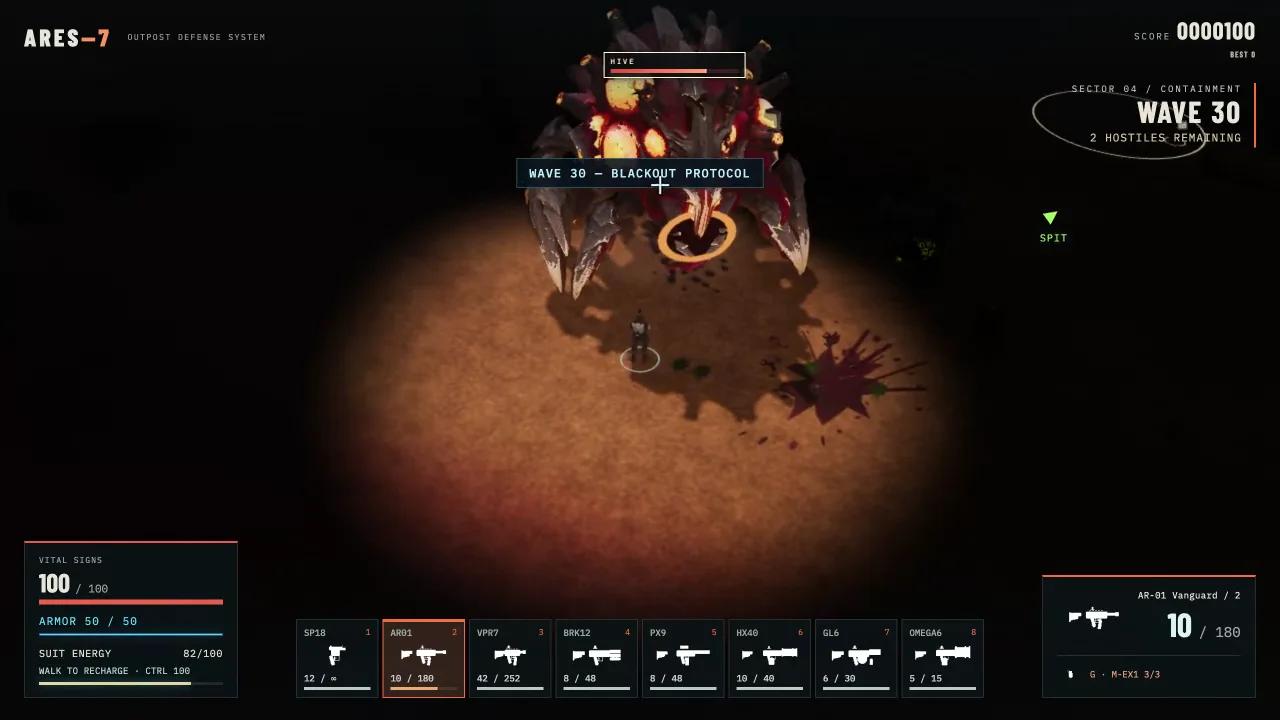 Actual gameplay · silent captureBlackout meets the Tyrant
08 / Art direction & interface
Industrial restraint around biological spectacle.
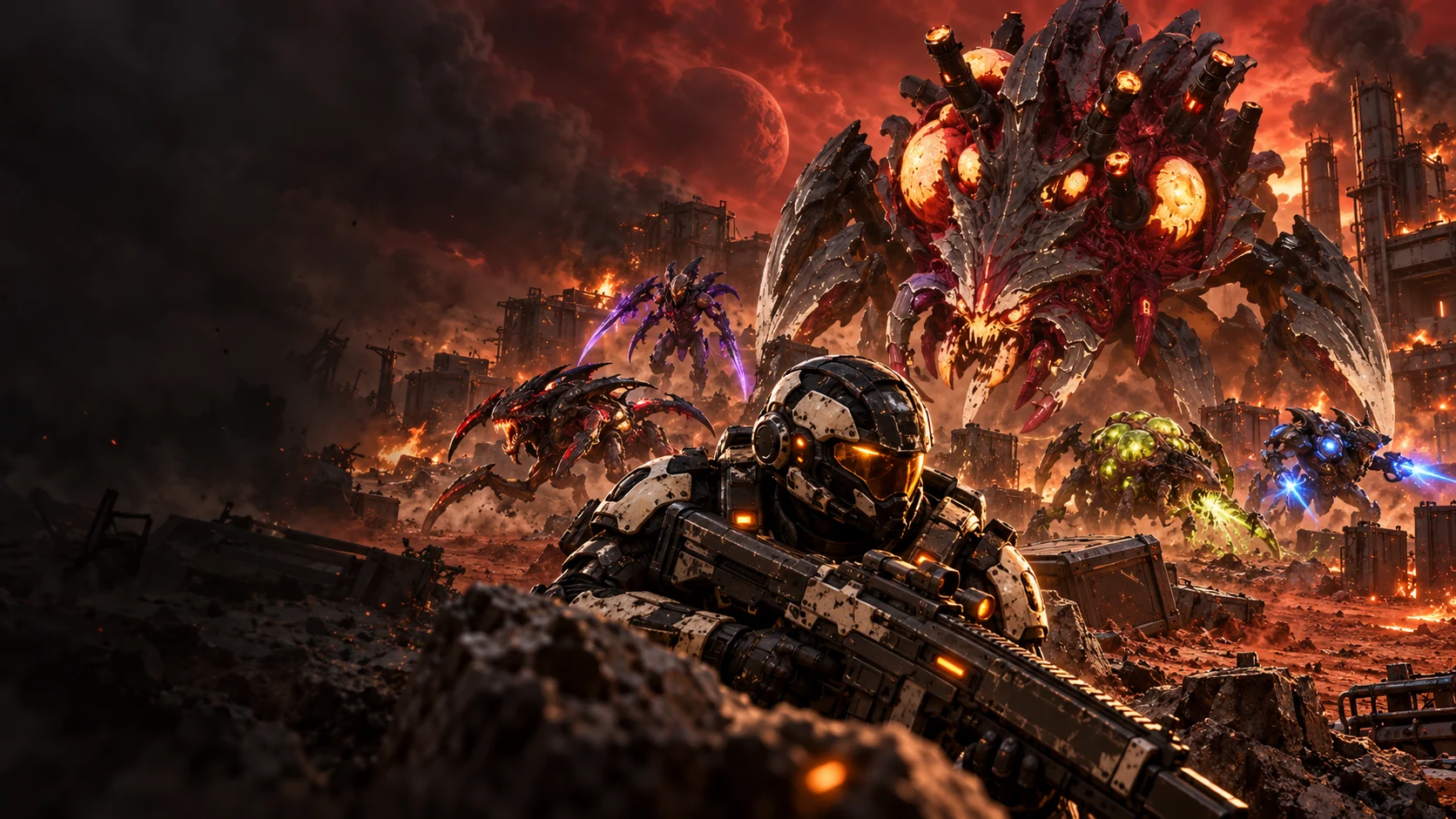
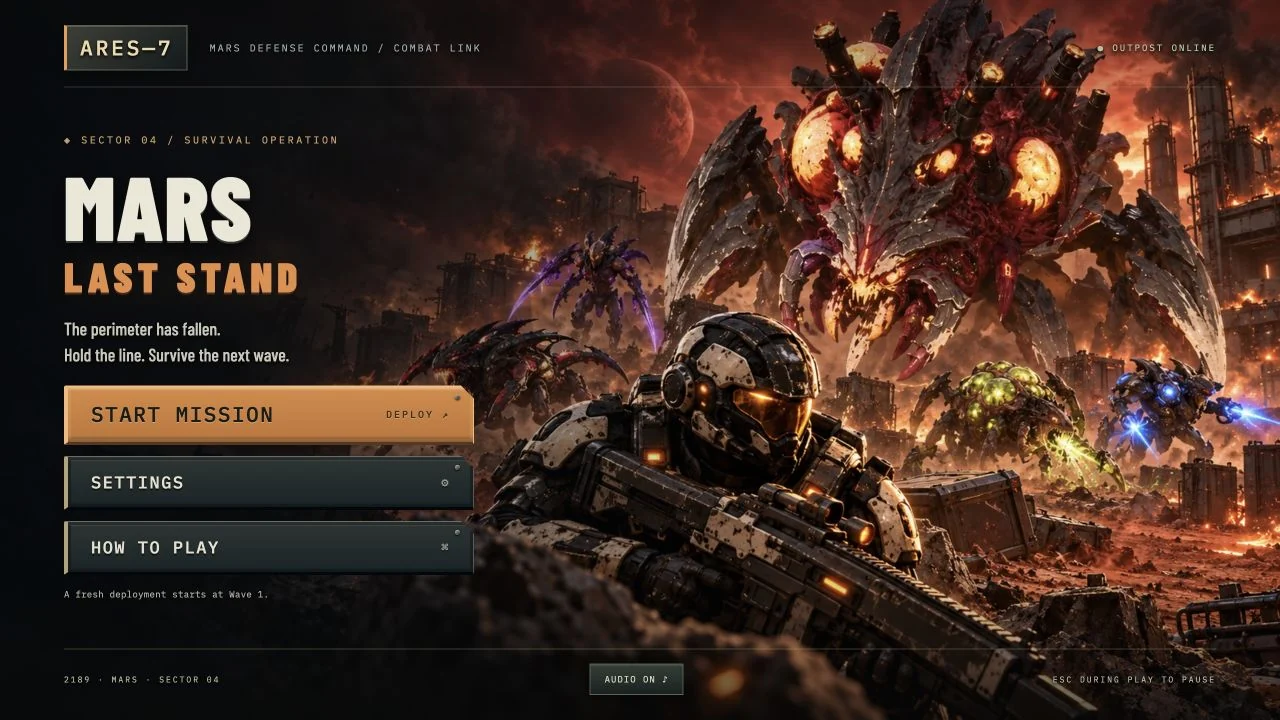
Worn pale armor, gunmetal UI and orange industrial signals stay quiet enough for colored alien organs and attack cues to lead. The menu artwork establishes atmosphere; the actual game uses an elevated perspective camera and a compact combat HUD. These are deliberately shown as different kinds of image.
09 / Ownership & method
Direction, systems and critical review.
I directed the concept, visual references, enemy and weapon identities, gameplay priorities and acceptance criteria. I reviewed models and interface changes, playtested builds and used recorded gameplay to catch failures that a passing build missed.
10 / Current status
Playable is not the same as release-ready.
The build connects movement, combat, five alien roles, eight firearms, upgrades, destruction, Blackout and repeated Hive encounters. It is an evolving playable project, not a shipped commercial game. No audience, revenue or retention results are asserted.
As of 27 Oct 2026: 156 automated checks and 73 combined browser checks were recorded as passing, plus separate wreckage/collapse tests. These are development checks, not user outcomes.
HIGH-preset checkpoints were recorded at roughly 11–31 FPS; later intervals in a prolonged multi-boss run fell to roughly 8–12 FPS, with aim delays under load. The runs used different viewports, so they do not establish a clean before/after improvement. Sustained performance and final visual acceptance remain open.
Publication boundary: supplied/source mesh rights and generated-art terms still need owner confirmation. The latest candidate audio is not commercially cleared, so all five gameplay recordings are silent. The source repository is private; its link requires repository access.